“Road safety is not solely a transport issue; it is a societal issue that affects public health, economic productivity, community well-being and sustainable development. Through evidence-based dialogue and interdisciplinary collaboration, we can contribute to reducing the unacceptable burden of road fatalities in South Africa.”
– Dr Melusi Thwala, Manager: Science Advisory and Strategic Partnerships, Academy of Science of South Africa (ASSAf)
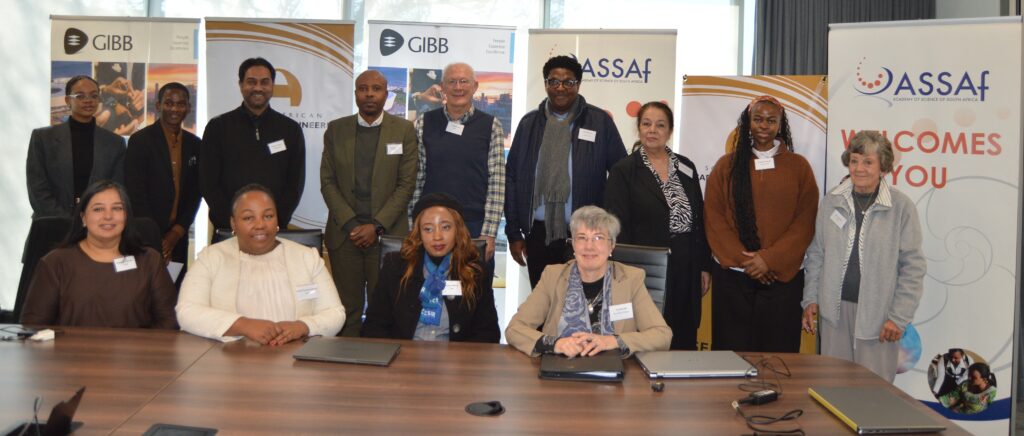
The Academy of Science of South Africa (ASSAf), in partnership with the South African Academy of Engineering (SAAE), convened a media roundtable on Driving Behaviour and Road Safety in South Africa: Evidence, Policy and Behavioural Change on 11 June 2026. Hosted by GIBB, the briefing assembled experts from engineering, transport research, infrastructure planning and road ethics to examine one of South Africa’s most pressing public safety challenges. Facilitated by Mr Vishaal Lutchman, Group Chief Executive Officer of GIBB and Executive Committee member of SAAE, the roundtable sought to promote evidence-informed dialogue on the behavioural, infrastructural and policy dimensions of road safety and to strengthen engagement between researchers, practitioners, policymakers and the media.
Opening the event, Dr Melusi Thwala, Manager: Science Advisory and Strategic Partnerships at ASSAf, highlighted the importance of interdisciplinary collaboration in addressing road safety challenges. The roundtable featured presentations by Ms Sekadi Phayane-Shakhane, Chief Executive Officer of the South African Institution of Civil Engineering (SAICE); Ms Busisiwe Marole, Transport Researcher and Candidate Civil Engineer at the CSIR Smart Mobility Cluster; Ms Mathabo Masegela, Senior Manager: Planning at Roads Agency Limpopo; and Dr Lee Randall, Founder of the Road Ethics Project. Together, the speakers explored the relationship between human behaviour, infrastructure, transport planning, ethics and road safety outcomes.
A key message emerging from the discussion was that while human behaviour remains a major contributor to road crashes, road safety outcomes are shaped by a broader system that includes infrastructure design, transport planning, enforcement, education, public awareness and social conditions. Particular concern was expressed regarding the impact of road fatalities on vulnerable road users, including pedestrians, children, public transport users, cyclists and low-income communities.
Speakers advocated for a Safe Systems Approach, which recognises that while people will make mistakes, road transport systems can be designed to prevent those mistakes from resulting in fatalities or serious injuries. The approach emphasises safer roads and roadsides, safe speeds, safer vehicles, responsible road user behaviour and effective post-crash response as interconnected components of a safer transport system.
The role of the media was also highlighted as critical in translating research and evidence into public understanding. Participants emphasised that journalists and communicators play an important role in raising awareness, shaping public attitudes, supporting behavioural change and ensuring that evidence-based road safety messages reach communities across South Africa.
The discussion highlighted the importance of fostering a culture of ethical road use and shared responsibility among all road users. Participants agreed that meaningful and lasting improvements in road safety require not only engineering and enforcement interventions, but also changes in social attitudes, public values and everyday decision-making.
The roundtable concluded that reducing road fatalities requires coordinated action from government, industry, researchers, engineers, civil society, communities and the media. Participants agreed that road deaths are preventable and that meaningful progress will depend on sustained commitment to evidence-based interventions, behavioural change and safer transport systems.